

I’ve never been a great lover of fish, other than for the few months I lived in Jerez de la Frontera in Andalucia, a town famous for its sherry, flamenco (where it was supposedly born), and being the home of the Royal Andalucian horse dancing school, none of which particularly enthused me, although it did have the most incredible fish market. (And, apropos of nothing at all, Jerez is near Cadiz, the first city and port in Europe, and where that supposed icon of British gastronomy – fish and chips – was born, invented by the Jewish community as a Shabbat meal because it could be eaten cold.) But I’m almost a thousand miles south, in Essaouira, Morocco’s home of the laid back on the Atlantic coast, and just the place to sample the best fish in the country.

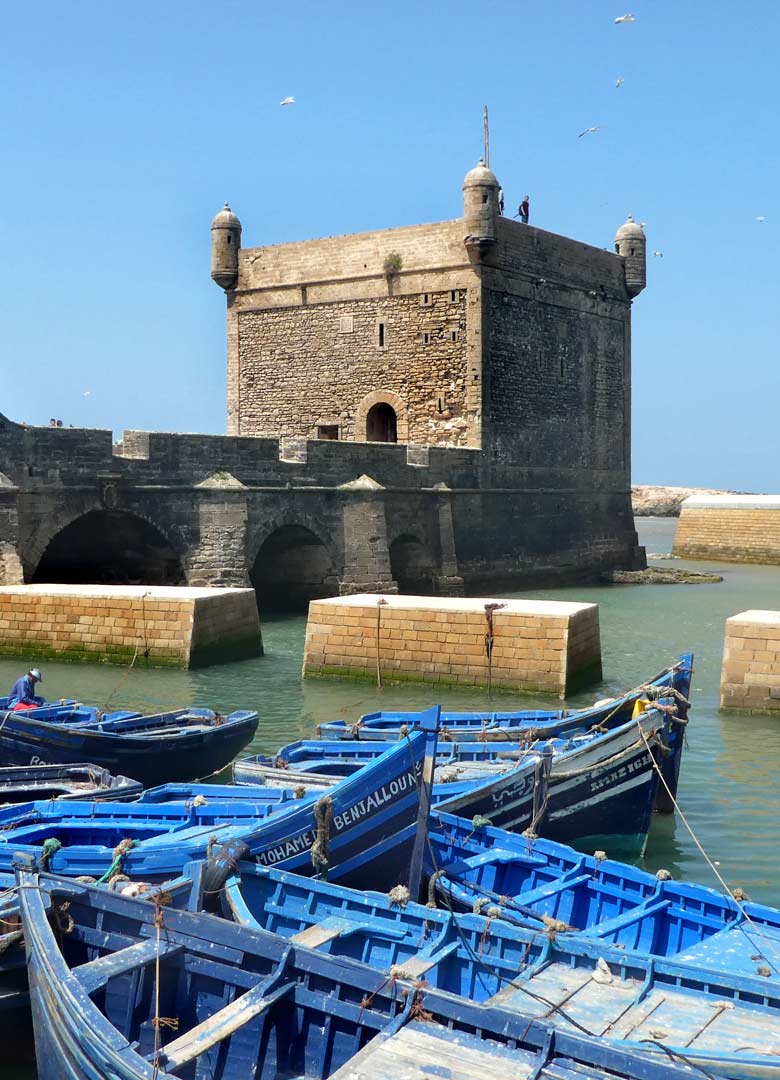
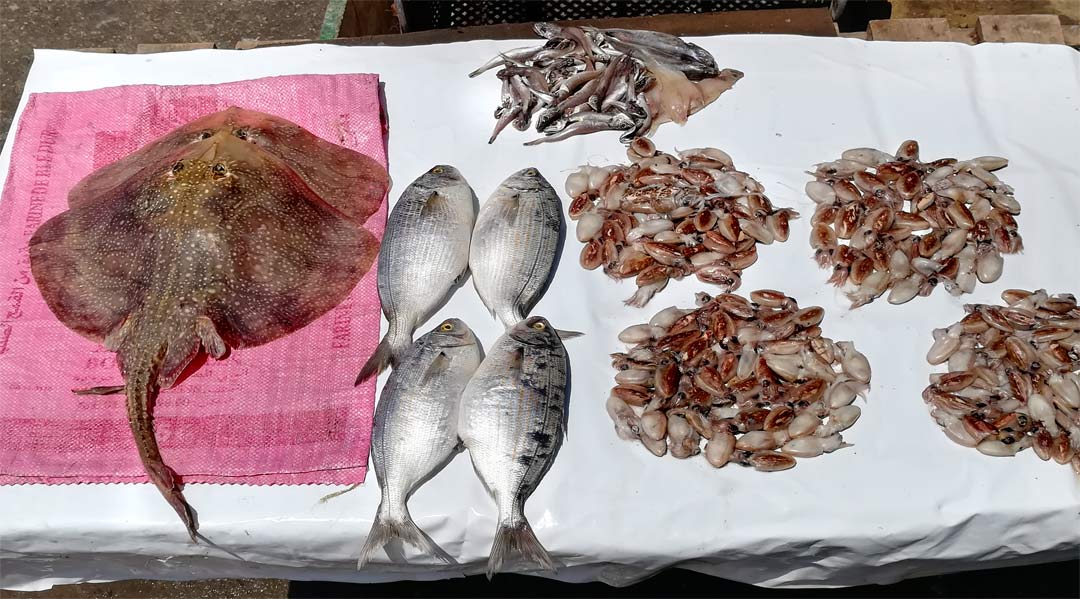
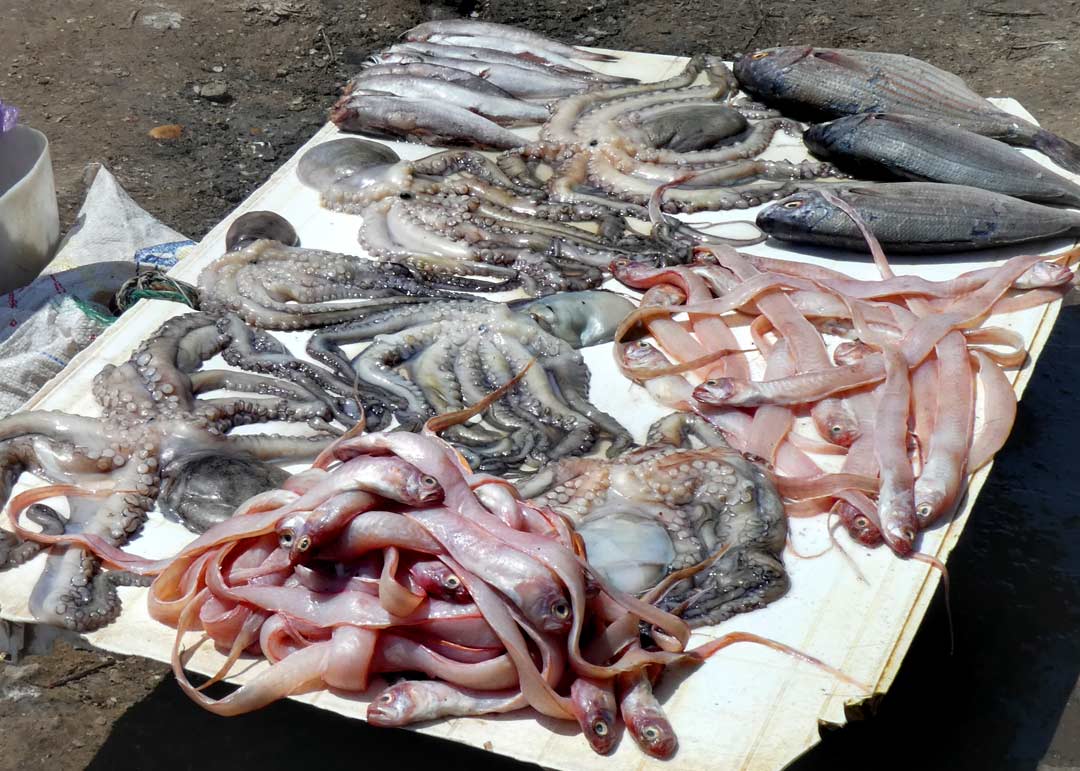
The quayside in the harbour around noon is where the words ‘hustle’ and ‘bustle’ were made for. Men and women alike, young and old, haggle over sardines sparkling in wooden boxes of crushed ice, dorada still with a salt-sea smell, family-size octopi, and some seriously ugly specimens that look terrifying even when dead.
 I discuss my lunch requirements with Hamid, a fisherman selling his catch from a box filled with crushed ice. A fine dorada is selected and a handful of fat sardines – and Hamid has a big hand. The seven he drops on a piece of paper alongside the dorada are far more than I would normally eat. For this lot I pay the princely sum of thirty dirhams. When I hand over the money, Hamid tries to put another dorada on the pile, just for friendship’s sake, but I tell him that as much as I appreciate his generosity, it would probably end up being eaten by one of the street cats because I have enough for a grand lunch already.
I stroll over to ‘grill street’ in the narrow alleyways off Derb Chbanat, where cubby-hole restaurants prepare tajines of slow-food takeaways. On the way I pick up a bottle of Poms, my favourite sparkling apple juice when I’m in Morocco. I put myself and my plastic bag of fish in the hands of Madame Hadija, who whisks them away to clean and grill.
In the small square, charcoal grills made from large cans cut in half are set up on rickety tables thrown together out of odds and ends of lumber. Three worn out white plastic garden tables and seven chairs shunted together below a pair of beach umbrellas provide the dining area of Madame Hadija’s establishment, a place where locals sit and exchange a few words if no-one is using the chairs for commercial purposes. Three one-person tajines rest on top of individual charcoal burners, and are constantly being replaced as they are carried away for someone’s lunch. When one is removed the coals are given a quick rake over and top up, with a breeze from a small circular ventilation wall fan held in Madame Hadija’s hand to get the coals glowing before another tajine is set in place. As the smoke wafts along the light breeze through the alleyways the aromas of grilling fish perfume the air.
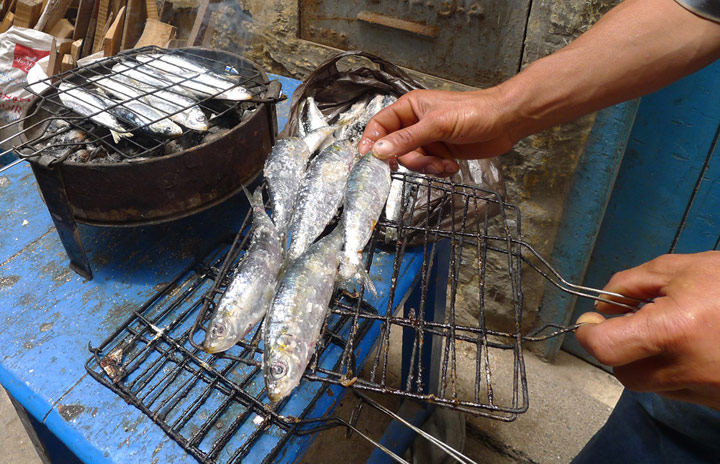
Like a sommelier showing the label of an expensive bottle of wine, Lahcen, the man who is to cook my sardines, holds them up in the fold-over grill for my inspection before putting them on his round charcoal burner. The local bakery is literally a hole in the wall, and while my sardines are cooking Madame Hadija walks over and buys the small flat loaf I’m to eat with my fish.
As much as I like dorado, I’ve never been a fan of either sardines or charcoal grills, but with something so fresh from the catch, a large squeeze of lemon and Lahcen’s decades of experience I’m converted, although my problem is the same as it is with making a decent cup of mint tea. Can I reproduce this splendid flavour at home?
More about Morocco
Images
Stories
Leave A Comment