

The Spanish government would have you believe that the two mainstays of Spanish life are church and state, but the man in the street has a different opinion; he will tell you that the two most important elements of Spanish life are the siesta and the fiesta.
Spain is renowned for its fiestas, extravagant parties that often last for days; times when families and friends come together to celebrate. Most of the major events will be supported by clubs and associations, affiliation to which usually begins in childhood and lasts a lifetime. Many fiestas have a religious or cultural basis – or at least that’s what most people would have you believe – but some are just simply weird.
Las Fallas de Valencia
 Think of the biggest and boniest bonfire and firework display you’ve ever seen, the one you went ‘wow’ over – and that’s nothing compared to the Crema, the night the whole kit and caboodle of Valencia’s Las Fallas Fiesta goes up in smoke. Very, very expensive smoke.
The name Las Fallas simply means ‘the fires’ and comes from the burning of the phantasmagorical sculptures – knowns as ninots – that form the centre of this orgy of bright lights, gaudy costumes, inspiring pyrotechnics, free-fall partying and conspicuous paella consumption that has become one of the biggest – and certainly the noisiest – fiesta in Spain.
There are ten fallas especial, the monumental works that have been a year in the making and which were once meant to caricature local politicians and their finagling ways, but are now more about how extravagant and fanciful the artist/sculptor can get away with being. The outrageousness reached its peak in 2006, when Falla Nou Campanar were reported to have paid 600,000€ for something that flamed away in less than twenty minutes.
15th – 19th March
Feria de Seville
 As the clock strikes midnight on a Monday late in April, the crowd assembled in the Real de la Fería in Seville roars in delight, as the Portada, the enormous fairground entrance, bursts into gaudy illumination. One by one the fifteen streets fill with the light of 22,000 bulbs encased in farolillos, small colourful paper lanterns. It is Lunes del Alumbaro, Monday of Light, the opening night of the Feria de Abril, Seville’s biggest and most boisterous fiesta, six days of flamenco, horses, bullfights, food, drink and late night partying. It will finish the following Sunday night with a spectacular firework display over the Rivhttps://www.youtube.com/watch?v=nMroCXN5FjIer Guadalquivir.
The streets of the tented village, said to be the biggest of its kind in the world, are lined with casetas, large tents with green or red stripes, and a triangular shawl, a pañoleta, decorated in an artistic motif, hanging over the entrance. There are 1047 of them, belonging to eminent local families, groups of friends, clubs and businesses. Most of these casetas are intensely private affairs, but each barrio in the city has a caseta, which, along with those run by political parties, have free admission to the general public.
Usually held two weeks after Semana Santa, the main Easter festival.
Feria de Malaga
 Malaga is one of Spain’s most under-rated cities, and the same can be said of its annual fiesta, which, despite being one of the biggest on the national calendar and equal in size and frivolity to Seville’s, is almost unknown to overseas visitors.
Eight days of rowdy partying begin around the 15th August with the formality of a local celebrity making an official announcement from the balcony of the town hall, although the true beginning is the enormous firework display immediately after the announcement.
From noon until 7pm the Feria de Día sees the streets filled with glamorous dames sashaying around in flamenco frocks or riding in horse and cart taxis decked out with colourful ribbons and driven by chaps in traditional costume. Open-air bars are everywhere, dispensing vast quantities of sherry, and music fills the air. By night the
giddiness moves to the Real de la Feria, where the huge fairground begins to warm up around 9pm. Shuttle buses do a roaring trade moving the crowds from the city centre to the Feria and back throughout the night.
Mid-August.
Moros y Cristianos, Villajoysa
 The Moros y Cristianos celebrates the banishment from the Iberian Peninsular of the Moorish usurpers, and is one of Spain’s most widespread and important fiestas. Many of the towns and cities that celebrate it do so simply as an excuse for dressing up, but Villajoyosa is one of the few towns which has documentary evidence of a nautical invasion by Berbers. In 1538, during one such attack, the townsfolk called on Santa Marta, who conjured up a storm and repelled the invaders. Reckoning they were onto a good thing, the vileros elected her Patron Saint, and the desembarco, the battle that takes place on the beach at dawn, became a major part of the week-long celebrations.
Spectacular parades, castles by the beach and glorious fireworks, a high point of the fiesta is an attack on the town from the sea by painted moors. In the pre-dawn hours of the 28th, the Compagnies de Moros parade along the promenade to the port, where they pack twenty-two gently rolling boats in preparation for the battle to be held on the beach. A fair number of the piratical characters fall off the converted lifeboats (that actually do look like pirate ships) into the shallow Med and simply walk ashore for burgers and more beer at their fancy tents on the beach.
24th-31st July
Carnaval
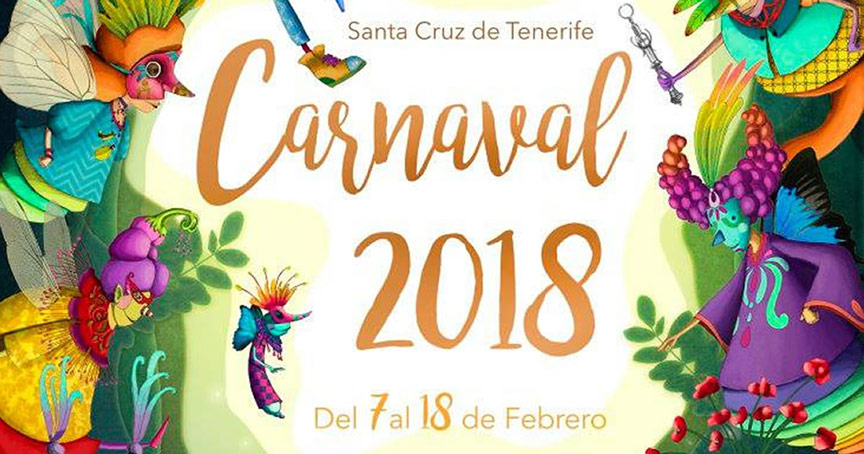
During the week before lent, usually the last in February, chaos takes to the streets of Spain with the celebration of Carnaval. Dressing up, weird parades and oceans of booze are the themes that run throughout the fiesta, but the daddy of them all is the Carnaval parade in Santa Cruz, Tenerife. It is said to be the equal of any in Rio, and is certainly the largest and most extravagant its kind in Spain and one of Europe’s biggest parties. A major focus is on beauty pageants, where skimpily dressed girlies cavort in a beguiling mixture of feathers, sparklies, and exposed skin, (ignoring the goose bumps of a chill winter’s night), culminating in the Crowing of the Carnaval Queen. If you can’t get tickets for the competitions, you can celebrate the fiesta at mogollones, huge open-air parties.
In Cadiz the focus of Carnaval is music, with wandering bands, spontaneous flamenco dancing, and raucous partying taking over the city. Sitges bursts into life at the end of February, with Carnaval attracting the drag talent of Europe with the boldest and brightest costumes imaginable for the themed parades.
Los Tres Reyes Magos
Throughout Spain on the night of Epiphany, the 5th January, Melchor, Gaspar and Baltasar, the Three Wise Kings, take to the streets in enormous parades of camels, jugglers, dancing girls and carnival floats the size of small houses, from which the kings throw sweets and sometimes small gifts to goggle-eyed children. Not a fiesta in the sense of Valencia’s Las Fallas or Seville’s Feria de Abril in that it takes place on a single night and not over a few days, but it is a wonderful example to show how the Spanish love a parade.

Read about some of the more unusual Spanish fiestas at

Leave A Comment